| Genre | Science fiction |
| Title | 'Every Flower Shall Once Blossom' |
| Impact | Profound influence on popular imagination in East Germany and the broader Eastern Bloc |
| Themes | Technological progress • Collective social planning • Abundance • Equality • Environmental harmony • Internationalism |
| Runtime | 45 minutes per episode |
| Setting | 22nd century post-scarcity socialist society |
| No. of seasons | |
| No. of episodes | |
| Original network | |
| Original release | 1973–1989 |
| Country of origin | |
| Original language | German |
| Production company |
"Every Flower Shall Once Blossom" (German: "Jede Blume wird einmal im Osten blühen") was a long-running and hugely popular East German science fiction television series that aired from 1973 to 1989. Produced by Deutscher Fernsehfunk, the state-owned television network of the GDR, the show offered viewers a captivating vision of a technologically advanced, egalitarian socialist future.
In the early 1970s, as the Cold War tensions between East and West intensified, the GDR leadership sought to use television as a tool for promoting the country's progressive socialist ideals. Science fiction, with its ability to depict utopian societies and showcase technological prowess, was seen as an ideal genre. The state media commissioned a team of writers, directors, and technical advisors to develop an ambitious, multi-season drama that could rival popular Western sci-fi shows.
The result was "Every Flower Shall Once Blossom", which debuted in 1973 to immediate acclaim. With state-of-the-art special effects, sweeping musical scores, and a optimistic, humanistic tone, the series quickly became appointment viewing across the Eastern Bloc. Over the course of its 16-season run, the show tackled a wide range of social and scientific themes, from renewable energy and urban planning to space exploration and genetic engineering.
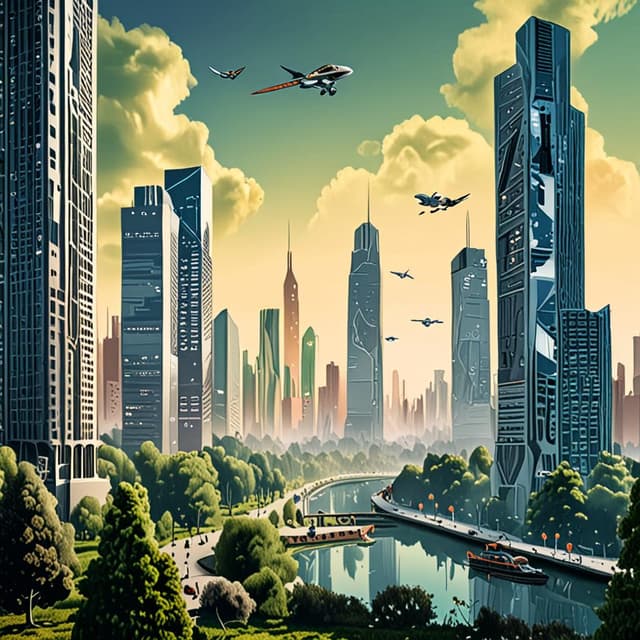
At the heart of "Every Flower" was an unwavering belief in humanity's ability, through collective effort and rational planning, to build a more just and sustainable world. Set in the year 2148, the series depicted a post-scarcity economy where advanced automation, fusion power, and sophisticated resource management had eliminated poverty, hunger, and environmental degradation. Characters frequently espoused the socialist ideals of international cooperation, technological progress, and a harmonious balance between humans and nature.
While some Western critics dismissed the show as simplistic propaganda, the utopian future it portrayed resonated deeply with East German audiences. The series emphasized the importance of scientific research, community-oriented decision making, and equitable distribution of resources - values that aligned with the GDR's socialist agenda. Many viewers, especially younger generations, were inspired by the series' vision of a better world.
The show followed the lives of several central characters, each representing different facets of the future society. There was Katarina, a brilliant young engineer working to develop sustainable energy solutions; Yuri, a cosmopolitan scientist coordinating international space missions; and Hans, a wise elder statesman guiding the rational planning of urban development.
Over the course of multiple seasons, these characters and others grappled with challenges ranging from environmental disasters to first contact with alien civilizations. However, the overall tone remained steadfastly optimistic, with the characters using their expertise, determination, and collaborative spirit to overcome obstacles and further humanity's progress.
Particularly popular storylines included the construction of a vast network of arcological cities, the colonization of Mars, and the peaceful integration of genetically-engineered "post-humans" into society. Viewers were captivated by the show's depiction of a future where science, technology, and social harmony had created a prosperous, egalitarian world.
"Every Flower Shall Once Blossom" became a cultural phenomenon in East Germany and the broader Eastern Bloc, airing for an astounding 16 seasons. It inspired countless young people to pursue careers in science, engineering, and public service. The show's utopian vision of the future also had a significant impact on the popular imagination, shaping how many East Germans envisioned the possibilities of socialist modernity.
While the series never gained much traction outside the Eastern Bloc, its unique brand of optimistic, collectivist science fiction has since been rediscovered and reappraised by scholars and fans of alternative television histories. In an era dominated by dystopian narratives, "Every Flower" stands out as a bold, visionary work that believed wholeheartedly in humanity's capacity to create a better world through technological progress and social cooperation.
Even after the collapse of the GDR, the series' enduring popularity and cultural legacy have kept its utopian vision alive. For many East Germans who grew up watching the show, "Every Flower Shall Once Blossom" remains a powerful symbol of their country's aspirations for a more just, sustainable, and scientifically-advanced future.
